
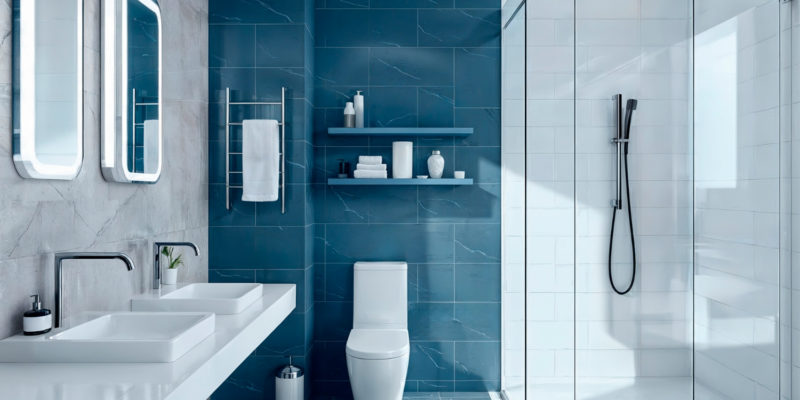
Is renovating your bathroom on the agenda, or are you planning to build a new bathroom or kitchen? Waterproofing is particularly important in these rooms, which have to withstand high levels of moisture.
Why Bathroom Waterproofing Is Crucial
Wet areas like the shower require special treatment to avoid damaging the entire household.
While tiles themselves are waterproof, years of daily exposure to cleaning products and splashing water will wear down the grout and prevent it from completely repelling moisture.
The consequences of inadequately sealed damp rooms are extensive. Professional waterproofing is especially important in damp rooms like bathrooms to prevent long-term water damage.
Because the bathroom is subject to a particularly high level of water, it’s naturally also the most demanding when it comes to waterproofing.
However, not every area in the bathroom requires the same type of waterproofing.
Common Mistakes in Bathroom Waterproofing Radiator
– Inadequate preparation: Dirty or damp surfaces reduce the adhesion of the waterproofing. A lack of primer can also prove to be a mistake.
– Gaps in the seal: Even the smallest leak can lead to damage sooner or later.
– Liquid waterproofing applied too thinly: Two coats are the minimum for an effective protective layer.
– Wrong materials: Always use products that are particularly waterproof, flexible, and durable.
Key Areas to Waterproof in Bathrooms
– Shower floors and walls: Use sealing tape and liquid membranes to ensure a watertight surface.
– Bathtubs: Properly seal all connections to walls and floors to prevent leaks.
– Wall connections and corners: Corners are particularly vulnerable and should receive extra attention.
– Floors: Waterproof membranes under tiles protect against water penetration and long-term damage.
– Always use high-quality materials designed for wet areas.
– Apply liquid waterproofing or membrane in at least two layers for maximum protection.
– Check all corners, joints, and edges for gaps.
– Consider hiring a professional for complex areas like showers, wet rooms, or connections around bathtubs.
– Prevents hidden leaks and protects your home’s structure
– Stops mold and mildew growth, promoting a healthier environment
– Extends the lifespan of your bathroom and fixtures
– Reduces future repair costs, saving money in the long run
With careful waterproofing of your bathroom, shower, and bathtub, and by using the right materials and techniques, you can ensure your bathroom remains safe, functional, and leak-free for years. Investing in proper waterproofing now protects your home from expensive damage later.